Hi friends, the next project will be to produce a short movie in groups. My group is composed by Olaia, Unai and me, and I have to say that they have worked a lot. This is our story, called notes play:
Introduction: One day, three friends were at school.Olaia went to class to take something but she didn't appear.
Problem: By the time that the other friends were going home someone kidnapped Josu.
Actions: Unai started to investigate where his friend was and he found Josu's wacth and he realised that there was a riddle stuck in the bottom of the watch so,with Olaia's help he realised that the meaning of the riddle was the table were Josu usually sat. They went to the table and they realized that there was a clue the meaning of which they had to discover.After that, they read the clue and they discovered that the next step was in the garden. When they read the next clue they realised that Josu was in the attic.
Resolution: After the strange "game", they found Josu in the attic. Unai discovered that his friend had been kidnapped by Olaia (who was at first his friend). Unai realised that Olaia had a gun, Josu snatched Olaia's gun and he killed her.
End: they buried Olaia in the garden and no one realised about the event.
Tuesday, April 20, 2010

Wednesday, March 17, 2010
Tuesday, March 9, 2010
THE TXISTU
In ancient times a Basque inhabitant made his first "Txistu" with a bird bone, but the first evidence of the Txistu goes back to 1864. The three-hole flute has been used in many cultures and civilizations, and nowadays it exists in many places.
The Txistu has three holes and it is played with the left hand. As you need only one hand to play it, the other hand is used in many cases to play a percussion instrument. It is traditional to play the "danbolina" with the other hand in the Basque Country. Also we have to mention the case of Zuberoa, where there is a variant of the Txistu called "Txirula". This instrument is smaller than the Txistu and it is accompanied by the "ttun-ttun".

Nowadays we have three different sizes of Txistu: the "txistu" (tuned in "F"), the "Silbote" (tuned in Bb, B or C) and the "Txirula" (tuned in C). Apart from the Txirula, which is made in one piece, the others are made with a changeable inferior part to change the tune. Ebony wood or plastic is used to make Txistus and it has some metal pieces for decoration and to tune the instrument. People think that you can only play a few rural melodies with the Txistu, but this is not true. More than one thousand melodies for the Txistu are published. The preservation of such valuable treasure, transmitted in most of cases from parents to sons, is due to humble "txistularis" without any musical instruction, mainly inNavarre

Nowadays we have three different sizes of Txistu: the "txistu" (tuned in "F"), the "Silbote" (tuned in Bb, B or C) and the "Txirula" (tuned in C). Apart from the Txirula, which is made in one piece, the others are made with a changeable inferior part to change the tune. Ebony wood or plastic is used to make Txistus and it has some metal pieces for decoration and to tune the instrument. People think that you can only play a few rural melodies with the Txistu, but this is not true. More than one thousand melodies for the Txistu are published. The preservation of such valuable treasure, transmitted in most of cases from parents to sons, is due to humble "txistularis" without any musical instruction, mainly in
There are different types of melodies to play with the Txistu, for example, Groups of Serenades, Dancing-Games, Solemn Dancing... There was a band of "txistularis" in most of the cities of Gipuzkoa and Bizkaia. In general, small villages had a couple of "txistularis" and a drummer, whereas bigger towns used to add one "Silbote" to the formation, constituting little by little the current band of "txistularis": two "txistus", one "silbote" and one drum (usually called "atabal").

The name of the traditional concert of "Txistu" in the festivals of villages and cities in the Basque country is "Alarde". The Association of Txistu- players in the Basque Country was founded in 1927, and nowadays it has around two thousand members. This institution has played a decisive role in the development of the activity of the "txistularis". It is commonly said by "txistularis" that this instrument has lost ground in the past few years. They say that the Txistu is heard less and less "in the street", it has been substituted by groups of "trikitixas", "txarangas", "bands"...
In my opinion we have to change this, because the Txistu is part of the culture of our country.
Friday, January 15, 2010
Bye Larraitz!
This person that is call Larraitz, it's one of the best teacher that we have got it ever. Because she helps to everyone and it's a very nice teacher and we learnt a lot of things about English and we improved a lot in English and we have all improved as a person because of you. Besides, you give us a fantastic time we never forget you. Thanks for all you done this days with us and we promise that we're going to be good as students with the next teacher and We'd love to come and give us a visit.
Wednesday, January 13, 2010
Visit EKAIN: 'home' to the Pre-Historic man.
 The Ekain Cave is one of the most important coves in the Basque Country. It's very famous for its cave paintings from the Magdalenian period. On 8th June 1969, Andoni Albizuri and Rafael Rezabal, along with other members of the Antxieta group, discovered the Ekain cave and its paintings. The cave is located in Zestoa (Gipuzkoa) and it is divided in different galleries. Ekain has around 70 animal figures like horses, bears, goats... It is considered to hold the most important cave paintings in the Basque Country and one of the richest and most beautyful collections in French-Cantabrian art.
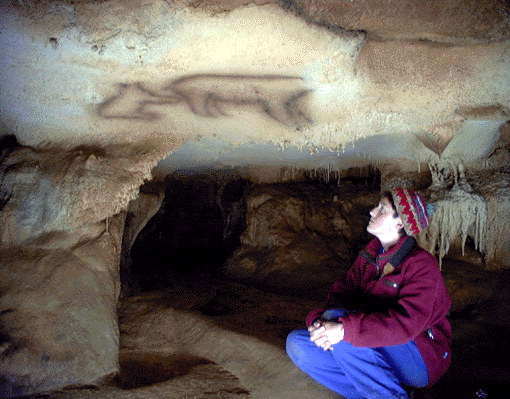 Ekain cave, along with other 14 caves on the Cantabrian Cornice, for example, Altxerri and Santimamiñe, was declared World Heritage for Humanity on 2008. This declaration was a prize to the hard work made the Basque goverment and other assotiations like Aranzadi Science Society.
Ekainberri, the replica of Ekain is located 600 meters from the original cave. They built the replica to maintain the original cave in good condition.Thanks to the replica, all the people can now enjoy these Basque Paleolithic paintings produced 14.500-10.000 years ago and experience what it is like to be inside a pre-historic "home".

Wednesday, December 16, 2009
CHRISTMAS IN SCOTLAND
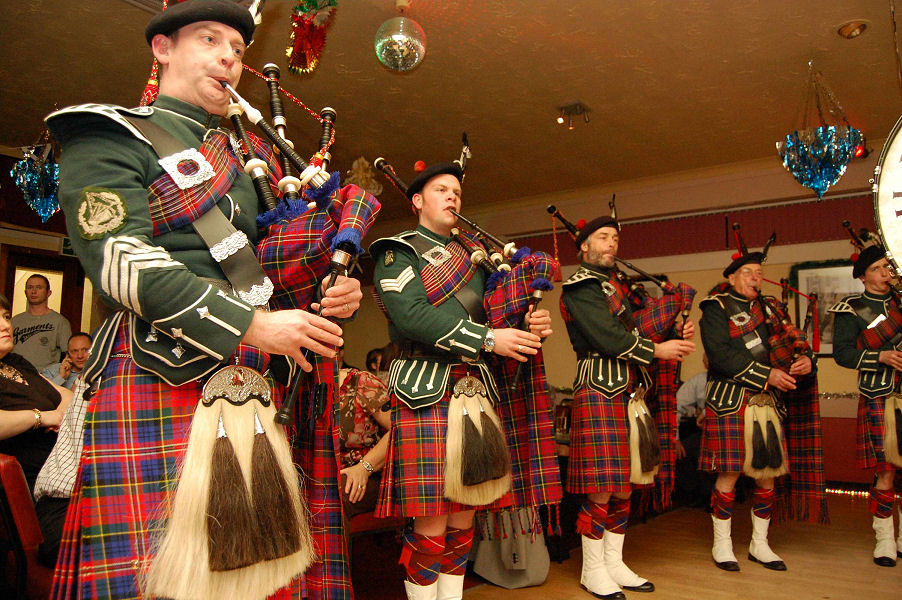 In this article I am going to write about Christmas in Scotland. In Scotland Christmas traditionally was not celebrated, because of religious reasons. The Church of Scotland was against the celebration of Christmas. As a consequence, Christmas Day was a normal working day in Scotland until the 1960s and even into the 1970s in some areas. But nowadays, Christmas in Scotland is a time for celebration because it's the birthday of Jesus. Decoration is very important and most houses are decorated with Christmas trees and different decorations. Children at this time often start to make Christmas lists, which are lists of the presents they want, like in the Basque Country with Olentzero. In the evening, they leave out a small glass of whisky or milk for Santa. But the most important celebration in Scotland is Hogmanay. It is the Scots word of the last day of the year, and it is celebrated on the night of the 31 December, until the morning of New Year's Day (1 January). Each area of Scotland often had different Hogmanay ritual. An example of a local Hogmanay custom is the performance with fire that takes place in Stonehaven. In Glasgow and the central areas of Scotland, the tradition is to celebrate Hogmanay parties involving singing, dancing, the eating traditional products and consumption of important amounts of alcohol, which usually is extend until the morning of January 1.
 One of the most spread national custom is the practice of "first-footing" which starts immediately after midnight. This involves being the first person to cross the entrance of the house of a friend or neighbour and often involves the giving of symbolic products such as salt (less common today), coal, whisky, and black bun (a rich fruit cake) intended to bring different things of luck to the neighbour. The Hogmanay customs of singing "Auld Lang Syne" has become common in many countries.These songs are traditional songs like the Hator Hator in the Basque Country.
 These are the main characteristics of Chrismas in Scotland and I think that they have a very interesting culture.
Merry Christmas and a happy New Year!
Wednesday, November 11, 2009
BIGFOOT: A REAL CREATURE?
Hi friends!

In this article I am going to write about "Bigfoot", also known as "Sasquatch". The name "sasquatch" is a derivative of the word "Sésquac", meaning "wild man". However, the name "bigfoot" was created by journalists. Most of the scientists say that bigfoot is not a real creature, but other people say that it is a real element and there are very developed descriptions.
Description:
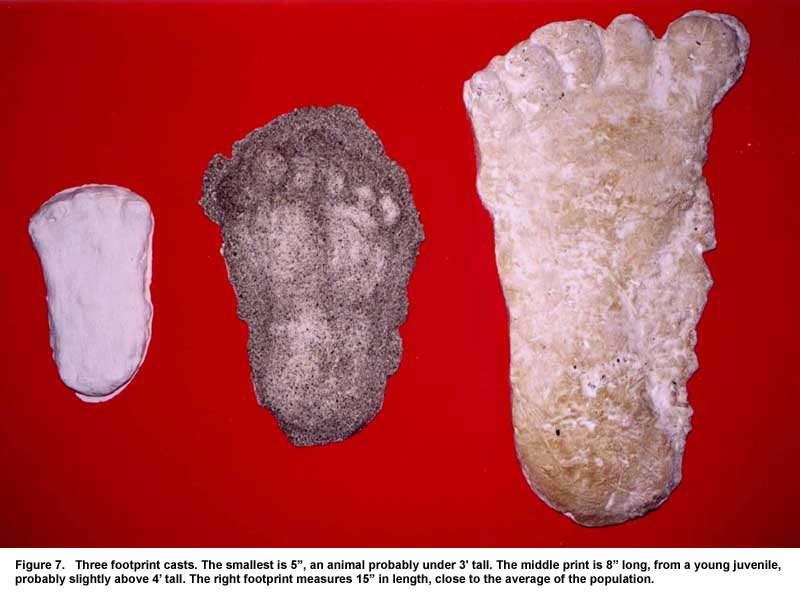
The sasquatch is a large, hairy, bipedal non-human primate, ranging between 1.8–3.0 m tall, weighing in excess of 230 kg and covered in dark brown hair. The top of the head has been described as rounded and crested, similar to the male gorilla. The sasquatch has blue eyes, the nose is nearly human in shape and the mouth is often reported to be thin-lipped. The enormous footprints for which it is named have been as large as 61 cm long and 20 cm wide. Bigfoot is commonly reported to have a strong, unpleasant smell.
Physiology and behaviour:
Bigfoot is an omnivore with a substantial carnivorous component to its diet. The sasquatch is a predominantly nocturnal animal because it has very good vision at night. They seem to react in a more relaxed way to women and children and avoid men, but there is no documented case in the past 100 years of a sasquatch doing deliberate harm to a person. The sasquatch is distributed across the North American continent. Their highest concentration appears in Washington, Oregon and northern California. Total numbers for the species in North America have been estimated by various approaches to be from a few thousand up to 10,000.
 Bigfoot sighting:
There are lots of bigfoor hunters. These hunters have found different footprints and samples of hair and blood, but these pieces of evidence are very polemic. Probably the most polemic one is the video filmed by Roger Patterson and Robert Gimlin on October 20, 1967.
In my opinion, bigfoot is not a real creature, I think that it is a legend created by journalists. Some people say that there is"physical evidence", but I think that this evidence is not enough, because they haven't found any skeleton of a bigfoot. This is my opinion, but only it is my opinion. What do you think? Is bigfoot a real creature?
Subscribe to:
Posts (Atom)